
How To Get Catering Clients
Table of Contents
Mastering Client Acquisition for Caterers
Struggling to fill your calendar with steady bookings? Many caterers face feast-or-famine cycles due to seasonal fluctuations and stiff competition from larger firms. In 2025, the catering industry projects a 15% rise in event demand, driven by personalized weddings and corporate gatherings. Learning How To Get Catering Clients becomes essential for sustainable growth.
Targeted catering lead generation addresses these hurdles by focusing on high-value event leads, ensuring consistent inquiries rather than sporadic ones. With 80% of clients starting their search online, digital tactics offer a powerful way to stand out and build lasting relationships.
This guide outlines eight proven catering business marketing strategies for attracting event catering leads and driving customer growth. From enhancing your online presence to forging partnerships, these approaches deliver measurable results through consistent effort. How To Get Catering Orders starts with initial inquiries, setting the foundation for booked events. Start with building your foundation online to attract those leads today.
1. Build Online Presence
Struggling with ‘How To Get Catering Clients’? In today’s digital world, a strong online presence is essential for event planners to discover your catering services. Without it, you risk missing out on local and national opportunities that could fill your calendar year-round.
Start by creating a professional website featuring high-quality menus, client testimonials, and easy contact forms. These elements build trust and encourage inquiries. Next, claim and optimize your Google Business Profile with vibrant photos, accurate hours, and detailed services to appear in local searches. Finally, incorporate basic SEO like keyword-rich descriptions to boost How To Get More Catering Orders. This enhances catering lead generation, driving 70% of initial leads through improved online visibility for caterers.
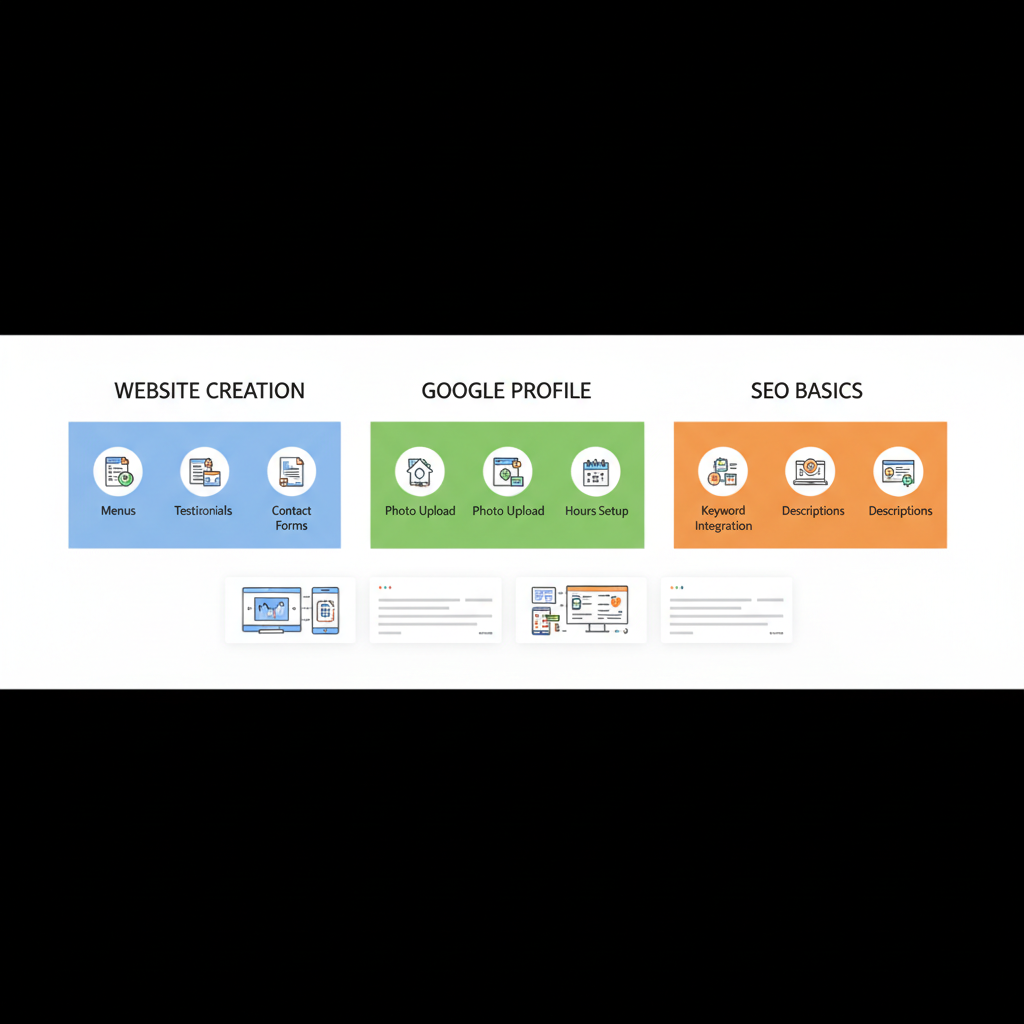
Three-step process flow for establishing catering business online presence
One caterer saw a 40% lead boost after optimizing their profile, turning digital discovery tactics into booked events. Quick checklist: Update photos weekly, add keywords monthly, test contact forms quarterly. Once visible, engage via social platforms to nurture those connections.
2. Leverage Social Media
In the realm of catering business marketing, social media stands out as a powerhouse for captivating audiences with mouthwatering visuals. Platforms like Instagram and Facebook allow caterers to showcase stunning event spreads, turning passive scrollers into eager prospects. According to industry insights, Instagram drives 60% of catering discoveries, making it essential for visual storytelling that highlights your unique offerings.
To maximize impact, start by optimizing your profile with a branded bio that emphasizes your specialties and includes a link to your website or booking form. Post a mix of content: behind-the-scenes videos of kitchen prep, client spotlights featuring successful events, high-quality photos of signature dishes, and quick tips on event planning. Use relevant hashtags like #CateringExcellence or #EventFeasts to boost visibility, and run targeted ads focusing on local demographics interested in weddings or corporate gatherings for effective catering lead generation.
Engage your audience through interactive stories and polls to foster social engagement for events, encouraging comments and shares that build community. For platform-based client outreach, respond promptly to inquiries and direct messages, converting conversations into bookings. Consistency matters–post regularly to avoid fading from feeds, as irregular activity can hinder growth.
Consider this example: A viral behind-the-scenes reel of a wedding setup garnered thousands of views, leading to direct messages that filled the caterer’s calendar. Guide prospects via DMs toward getting catering orders, transforming online buzz into real reservations. These social connections pave the way for real-world partnerships.
3. Network Local Events
While digital tools like social media offer broad reach, nothing replaces the personal connections forged at local events. Face-to-face interactions at bridal shows, chamber meetings, and food expos allow caterers to showcase their passion, discuss unique menus, and secure direct bookings. Incorporating catering business marketing strategies in these settings can transform casual conversations into lasting partnerships that drive repeat referrals.
To maximize event networking benefits, prepare a professional booth with tasting samples, branded brochures, and business cards that highlight your specialties. Joining local associations, such as chamber of commerce groups, provides access to budget-friendly expos where one event can net 5-10 leads for catering lead generation. Focus on storytelling: share how your farm-to-table approach wowed a recent wedding client. Follow up promptly with personalized emails recapping your chat and attaching a proposal. Effective marketing catering business materials, like digital portfolios, reinforce these interactions. Studies show networking boosts sales by 25%, validating the effort through consistent attendance and targeted pitches.
For instance, at a recent trade show, one caterer used a simple dialogue: “What type of events do you host? Our customizable menus have helped similar groups save 20% on costs while delighting guests.” This approach converted three leads into bookings within weeks, proving the power of community partnership strategies in finding clients. Local visibility extends beyond events to online SEO efforts for sustained growth.
4. Optimize Website SEO
To master How To Get Catering Clients, boosting your website’s SEO remains essential for attracting organic traffic from searches like wedding catering. This approach yields search ranking improvements by targeting relevant queries, turning your site into a lead magnet without heavy ad spend.
Start with keyword research using free tools like Google Keyword Planner to identify terms potential clients search. Optimize meta tags and alt text for images to enhance visibility, while creating blog content on catering trends builds authority and supports organic traffic methods. Ensure mobile responsiveness since many users browse on phones, and track performance with Google Analytics or Search Console. Note that local SEO can increase visibility by 50 percent, as per industry insights. Avoid black-hat tactics like keyword stuffing, which risk penalties; focus on genuine, user-focused optimizations instead.
For instance, a caterer who optimized their pages saw inquiries rise from 5 to 25 monthly after implementing these changes, demonstrating effective generating catering leads through better tracking. Captured traffic nurtures via email for lasting conversions.
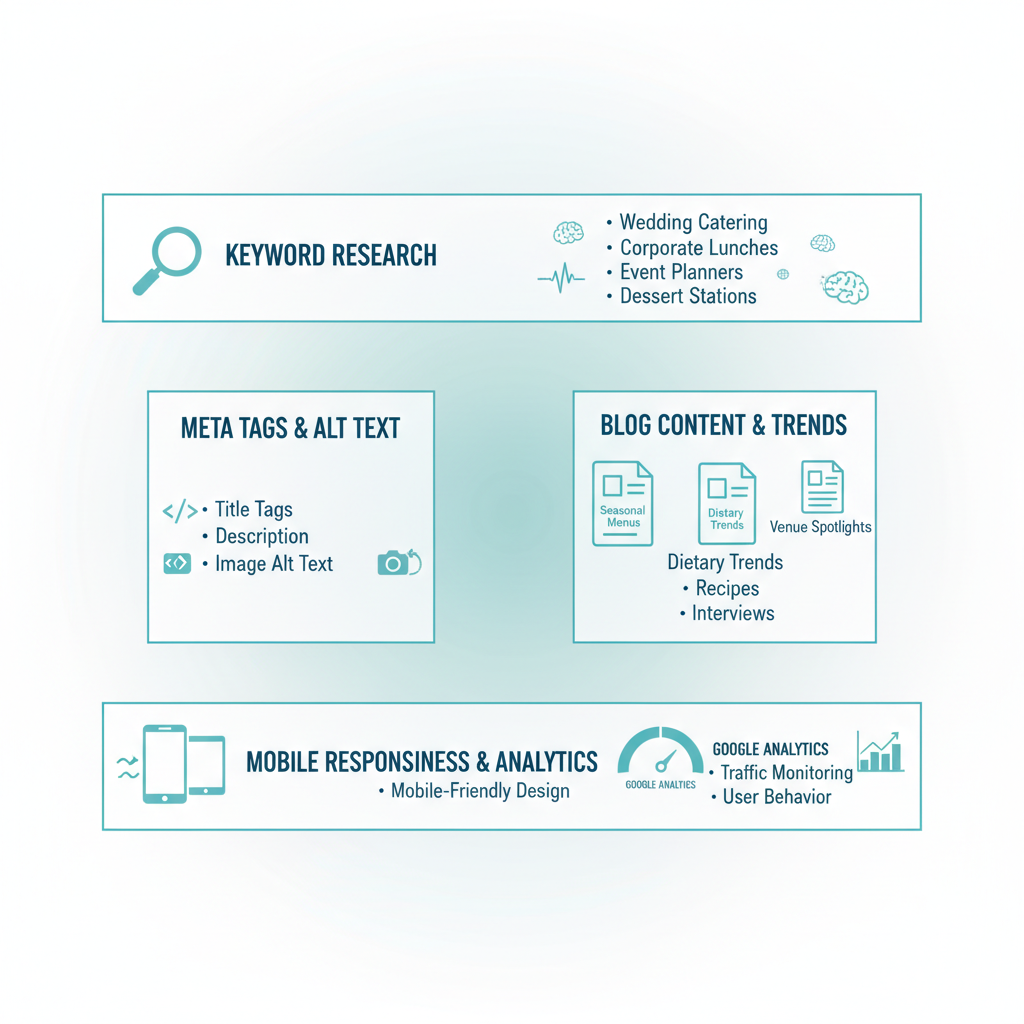
SEO optimization infographic for catering business websites
5. Use Email Campaigns
In catering business marketing, email campaigns serve as a powerful tool for nurturing leads from initial inquiries to confirmed bookings. These email nurture tactics build relationships by delivering value through personalized newsletters and timely updates, turning curious prospects into loyal clients. With high open rates, emails drive conversions more effectively than many other channels.
Start by integrating opt-in forms on your website to capture emails from visitors interested in your services. Implement drip sequences for follow-ups, sending automated series that address common pain points like event planning timelines. Craft compelling subject lines, such as ‘Unlock Your Dream Wedding Menu Ideas,’ paired with clear calls to action like ‘Schedule a Tasting Today.’ For catering lead generation, segment your list by event types–weddings, corporate gatherings, or private parties–to send tailored content that resonates. Tools like Mailchimp simplify setup, but always include GDPR-compliant unsubscribe options to maintain trust. Track open rates and clicks to refine your approach; personalized emails convert 30% higher than generic blasts.
Consider a drip campaign success story: A mid-sized caterer launched a three-email sequence welcoming new subscribers with menu highlights, a client testimonial, and a discount offer. This resulted in a 25% booking increase within two months, proving follow-up sequences warm leads effectively for future collaborations.
6. Partner Event Planners
Forming strategic partnerships with event planners opens doors to reliable catering lead generation opportunities, tapping into their extensive client networks for mutual referrals. These alliances can significantly boost your bookings, as referrals from planners yield 40% of new business according to industry insights. By collaborating, you position your catering services as a go-to choice for high-value events.
To build these referral alliances, start by identifying potential partners through industry directories or local networking events with planners in your city. Propose commission structures, such as 10-15% on referred bookings, to incentivize referrals while outlining basic agreement terms like mutual promotion clauses and performance metrics. Suggest joint webinars or co-marketing initiatives under your catering business marketing strategy to showcase collaborative lead sources. Measure success by tracking referral ROI through unique codes or CRM tools, ensuring the partnership delivers tangible growth.
For example, co-host a webinar on seamless event execution to win joint leads, resulting in a shared corporate gala booking. A simple template agreement should cover referral terms, payment timelines, and termination clauses–consult a legal professional for customization, as this is not legal advice. Such partnerships inspire internal referrals, enhancing your overall client acquisition pipeline.
7. Offer Referral Incentives
In the catering industry, satisfied clients and partners often become your best advocates. Referral incentives harness this word-of-mouth amplification, turning one-time bookings into ongoing streams of qualified leads. By rewarding those who refer new business, you foster loyalty and expand your network ethically and cost-effectively.
To build an effective program, start by designing simple yet appealing rewards like discounts on future services or exclusive gifts for referrers. Integrate this into your catering business marketing efforts by promoting the program on invoices, follow-up emails, and social channels. For tracking, assign unique codes to each participant to monitor referrals accurately and tie them to your catering lead generation goals. Share success metrics, such as how many new clients came from referrals, to motivate ongoing participation. Integrate these insights with your CRM system for automated follow-ups and performance analysis. According to industry insights, well-structured referral programs can double your leads without heavy advertising spends.
Consider a client who catered a corporate gala and received a 15% discount credit for referring a wedding planner, sparking a chain of three additional events in quick succession. This approach not only delights referrers but also demonstrates measurable growth. Referrals pair seamlessly with tech tools for scaling your catering operations.
8. Implement Lead Tools
In the competitive world of catering, implementing lead tools streamlines operations and enhances client acquisition. These technologies automate processes, saving time for creative menu planning and event execution. For caterers seeking reliable ways to grow, tools like CRMs and sales funnels prove essential in capturing and nurturing prospects efficiently.
Selecting the right tools begins with affordable options such as HubSpot, which offers a free tier ideal for small catering operations. For catering lead generation, integrate CRM systems with your website and social media to automatically capture inquiries from forms and ads. Funnels guide leads from landing pages through nurturing emails to bookings, incorporating a catering marketing strategy that aligns with event timelines. Analytics dashboards allow refinement by tracking conversion rates and drop-off points. According to industry forecasts, such tools can boost efficiency by 35 percent, with CRM trends emphasizing seamless integrations for better catering business marketing. Many platforms provide free trials, enabling testing without commitment; guarantee-like setups, such as performance-based features, reduce risk while optimizing tool-assisted lead capture.
A practical tip involves setting up a simple funnel: direct traffic to a landing page offering a free consultation, followed by automated follow-ups. This approach has helped caterers secure quick leads, often converting within weeks using funnel optimization techniques. Combine these for lasting growth.
Achieving Sustainable Catering Growth
Implementing these eight strategies provides a roadmap for How To Get Catering Clients through proven catering lead generation and catering business marketing techniques. From building an online presence to leveraging social media and email nurturing, the synergy creates consistent bookings. A multi-channel approach yields 50% more leads, as supported by industry insights on client acquisition.
To integrate these effectively, start small by auditing your current setup and applying one strategy weekly. Combine online foundations with tool-driven outreach for holistic client strategies. Consistent application transforms sporadic inquiries into steady revenue streams.
Embrace integrated growth approaches to achieve lasting success. Key actions include:
- Review and optimize your website today.
- Schedule social media posts for the week.
- Test a lead magnet to capture contacts.
Your catering business can thrive with these steps–begin now for sustainable expansion.