
How To Advertise Catering
Table of Contents
Unlocking Growth Through Effective Catering Advertising
In the competitive world of catering, many owners face feast-or-famine cycles with inconsistent leads for weddings, corporate events, and private parties. Learning How To Advertise Catering effectively can transform this challenge into steady bookings. (See How To Market A Catering Business.) As digital ad spend for the catering business is projected to rise 25% by 2025, targeted campaigns offer high ROI, with real clients seeing up to 184% increases in inquiries.
This guide empowers you with done-for-you marketing funnels that automate traffic generation and conversions, ensuring qualified leads flow to your inbox without tech headaches. “We went from sporadic calls to a full pipeline in weeks,” shares a wedding caterer who boosted events by 150%.
Discover practical steps from planning your strategy to optimizing results, backed by performance guarantees that minimize risk. Whether building a strong catering website or exploring event catering promotion strategies, you’ll gain the tools to promote catering services confidently and achieve predictable growth.
Preparing Your Catering Foundation for Advertising Success
Before exploring how to advertise catering effectively, solid preparation ensures your efforts yield bookings rather than wasted spend. Start by defining your target clients, such as wedding planners seeking seasonal peaks or corporate event coordinators needing reliable setups for high-volume gatherings. This step addresses how to find catering clients by creating personas that guide your focus.
Next, craft a compelling unique selling proposition (USP) for your catering business. Highlight specialties like farm-to-table menus or eco-friendly options to stand out in competitive markets. For instance, a wedding caterer might emphasize customizable packages that align with seasonal themes, building trust and appeal. According to marketing insights, 80% of catering leads come from targeted niches, validating the power of a tailored USP in event service marketing basics.
Assess your current digital assets, including a professional catering website optimized for inquiries. Ensure it features high-quality photos and easy contact forms. Budgeting is crucial; allocate at least $500 per month for initial ads to test campaigns without overextending.
- Review website functionality and mobile responsiveness.
- Compile a list of ad platforms like Facebook and Google.
- Set aside funds for creative assets and tools.
Gather testimonials for social proof, showcasing client success stories to boost credibility in catering promotion prep.
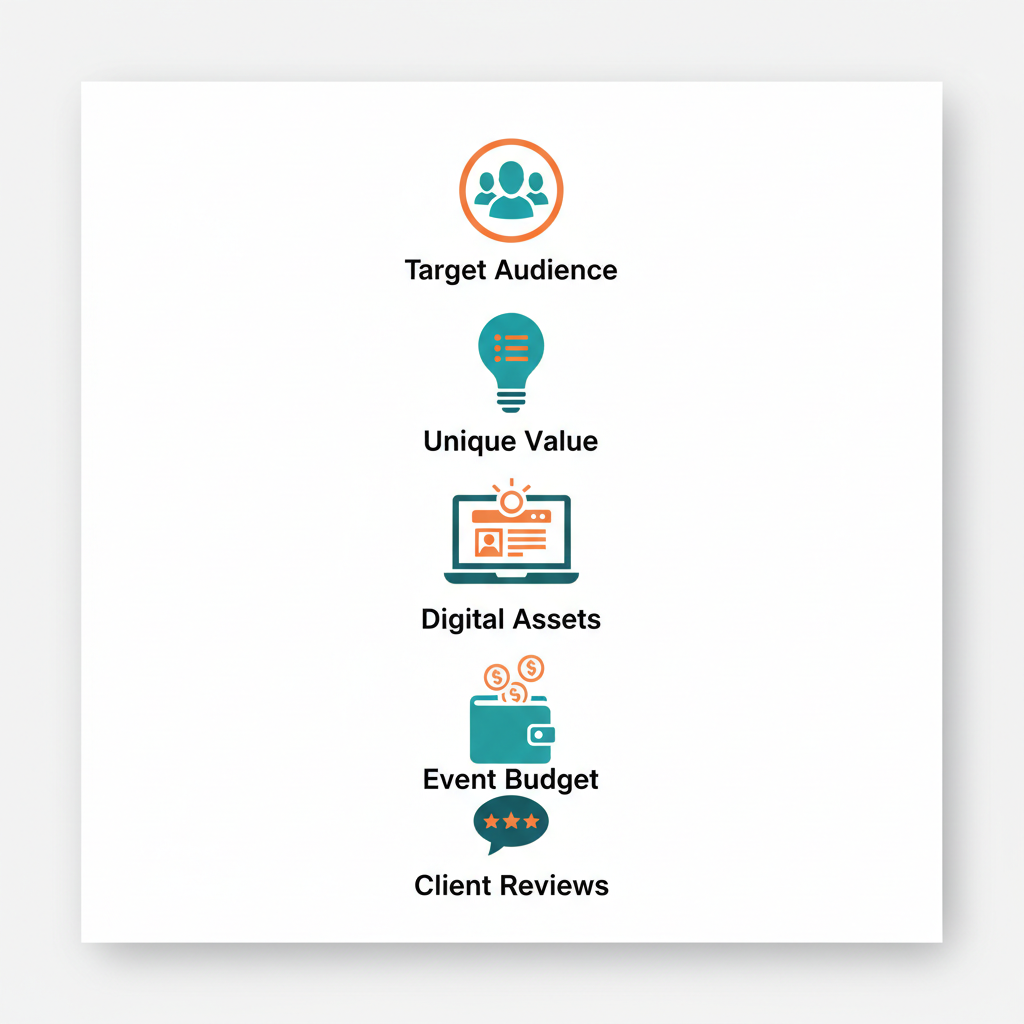
Icons depicting essential steps to prepare your catering business for advertising success
With these foundations in place, you’re ready to launch targeted campaigns that drive real results. Preparation not only prevents ad waste but positions your business for sustainable growth, much like strategies in How To Get More Catering Business.
Define Your Target Audience and Event Niches
In learning How To Advertise Catering, the foundation starts with defining your target audience and event niches. This ensures your efforts reach high-intent prospects, such as corporate teams planning galas or couples organizing weddings, boosting relevance and response rates.
Targeted advertising for catering business delivers higher ROI by focusing resources on clients likely to convert, rather than casting a wide net. For instance, corporate events often yield 40% higher margins than private parties, making niche alignment essential for sustainable growth.
Follow these steps to build your strategy:
- Create Buyer Personas: Outline demographics like age, location, and income; identify pain points such as tight deadlines for corporate planners; and estimate event budgets, say $5,000-$20,000 for weddings. Sample template: “Corporate Event Planner – Busy executive in urban areas, seeks reliable vendors for 50-200 guest functions, values efficiency and customization.”
- Segment Niches: Divide into weddings, corporate gatherings, and private celebrations. Research local demand using tools like Google Trends on your catering website to spot trends in coastal regions events.
- Map Opportunities: Align seasonal peaks, like summer weddings, with your catering business strengths for better client targeting.
Ask yourself: Who are your dream clients, and what events excite you most? Avoid pitfalls like over-broad targeting by starting narrow. This clarity sets up compelling messaging for Step 2, where you’ll craft tailored ads.
Craft Compelling Messages and Visuals for Ads
When learning How To Advertise Catering, start by crafting messages that resonate with your audience’s needs. Focus on benefit-driven headlines like “Elevate Your Event with Customizable Menus Tailored Just for You,” emphasizing stress-free events and personalized service. Script strong calls-to-action, such as “Book Your Dream Catering Today,” to prompt immediate inquiries for your catering business. See how to market a catering business for a step-by-step guide.
For visuals, select high-quality photos from past events showcasing vibrant dishes and happy guests, sourced from your catering website portfolio. Incorporate client testimonials to build trust, like “Our wedding was flawless thanks to their team.” Ensure designs are mobile-friendly for seamless viewing on any device.
These elements matter because compelling ad copy and visuals can boost engagement by up to 30%, as seen in successful campaigns that increased bookings through targeted messaging. Test variations via A/B splits to refine resonance, and avoid generic stock images–opt for authentic shots to connect genuinely with potential clients.
Select Optimal Advertising Channels and Platforms
How To Advertise Catering effectively starts with choosing platforms that reach event planners and clients seeking memorable meals. For a catering business, prioritize channels like Google Ads (catering ads) for intent-driven searches on wedding or corporate events, Instagram for showcasing appetizing visuals, email marketing to nurture leads from inquiries, and local directories like Yelp for community visibility. Each platform supports channel strategies for events by targeting local US markets with prepositions like ‘in busy cities’ to attract nearby clients.
Paid search excels in capturing high-intent traffic but requires precise keywords, while social media drives engagement through stories and reels. According to 2025 trends, Instagram yields 2x engagement for food visuals, making it ideal for platform choices for caterers. Email nurtures relationships cost-effectively, and directories boost local SEO for your catering website. Set up accounts on 2-3 platforms, allocate budgets starting at $500 monthly per channel, and track performance with tools like Google Analytics for cross-platform ROI.
This selection matters because it matches advertising spend to measurable leads, ensuring high returns on event bookings. Start small, focus on local targeting to find catering clients efficiently, and integrate with your site for seamless conversions. Next, build the sales funnel in Step 4 to guide leads toward bookings.
Build a High-Converting Lead Funnel System
Once you’ve selected your How To Advertise Catering channels, direct traffic into a structured funnel to convert clicks into inquiries (see how to get catering orders for tactics). Start by creating a dedicated landing page on your catering website, featuring a simple contact form, sample menus, and testimonials to build trust. Integrate a booking calendar for easy scheduling, and ensure full mobile optimization so users on phones can navigate seamlessly.
Next, set up automated email sequences for follow-ups, tailored to your catering business needs like event lead capture. Send a welcome email with pricing details, followed by nurture messages highlighting past successes. Test the entire flow for drop-offs by tracking user behavior and refining weak spots.
This system simplifies lead capture for events, making funnel tactics for caterers straightforward even for non-tech users. Automated follow-ups boost conversions by 25%, directly increasing bookings and helping grow catering sales.
Tips: Use free tools like Mailchimp for emails and Google Analytics for testing–no coding required.
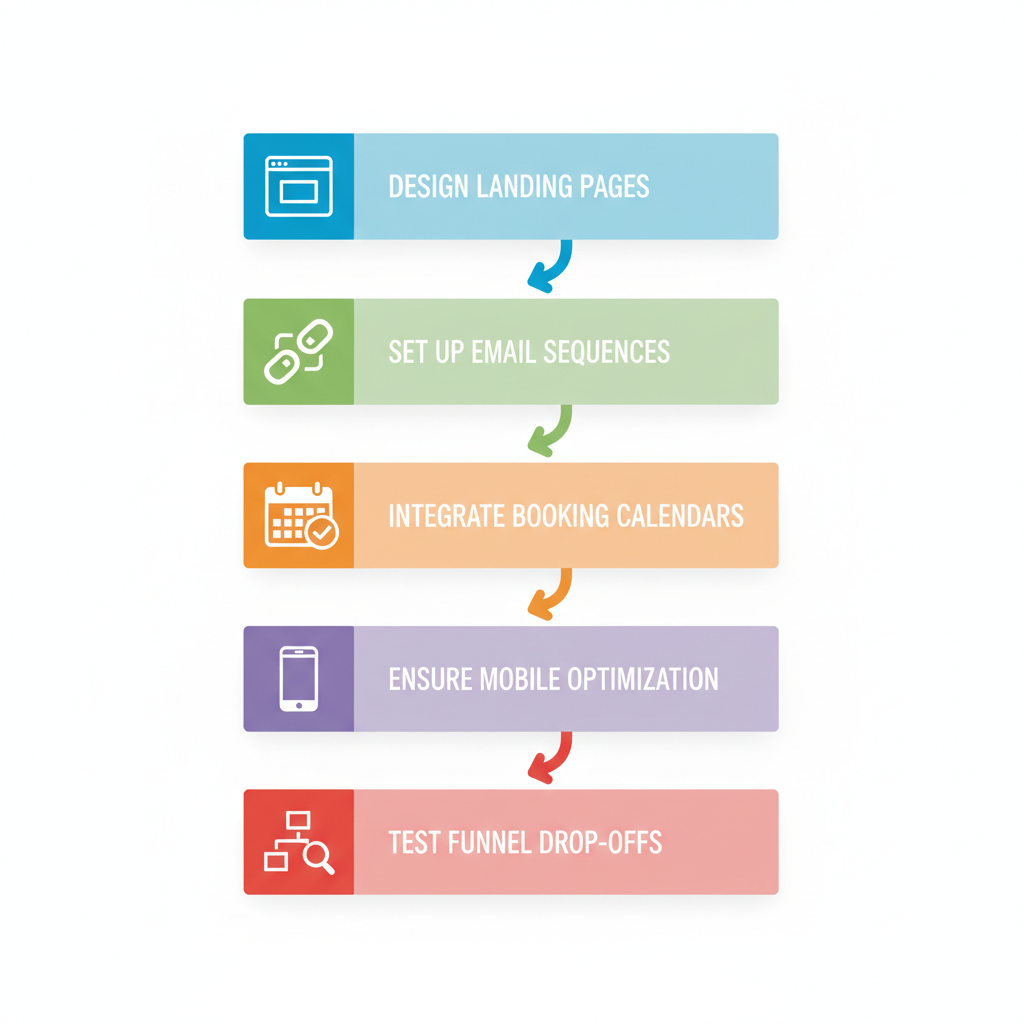
Step-by-step guide to constructing an effective lead funnel system for caterers
Launch and Optimize Your Initial Campaigns
With your funnel ready, it’s time to activate targeted ads following How To Advertise Catering best practices. Start by setting campaign parameters: allocate a modest starting budget of $500 to $1,000 per week, run for an initial 30 days, and focus geo-targeting in key markets like urban centers and event-heavy suburbs to reach event planners effectively. This setup ensures precise delivery of your message to potential clients.
Monitor key metrics closely, such as CTR, which measures the percentage of ad clicks relative to impressions, and conversions, tracking actual leads or bookings from your catering website. Pause underperforming ads that fail to engage, scale up winners showing strong results, and conduct weekly A/B tests on creatives to refine messaging for better resonance. For a catering business, these data-driven tweaks can boost lead volume by up to 50%, as seen in successful campaign adjustments outlined in industry guidelines.
This optimization process matters because it maximizes efficiency, turning ad spend into qualified inquiries without waste. Why it ensures efficiency: Quick pauses prevent budget drain on poor performers, while scaling high-converters amplifies reach affordably, fostering steady growth for your operations.
For tips, integrate Google Analytics basics on your catering website to track visitor behavior and conversion paths. Use custom events for form submissions to gauge funnel performance accurately. Patience is key in these early stages; allow 1-2 weeks for initial data to inform smarter decisions before transitioning to Instagram-specific strategies in Step 6.
Leverage Instagram for Visual Catering Promotion
Instagram stands out as a powerhouse for how to advertise catering businesses through captivating visuals that draw in event planners. To start, optimize your profile by showcasing high-light event photos in the bio, linking directly to your catering website for seamless inquiries. This setup positions your catering business as a visual feast, encouraging visitors to explore menus and contact details effortlessly.
Post dynamic Stories and Reels capturing behind-the-scenes prep, elegant setups, and client reactions to build excitement. Use targeted hashtags like #WeddingCatering and #EventPlating to reach niche audiences, while running geo-specific ads for local events boosts visibility. Collaborate with wedding influencers for authentic endorsements and analyze engagement metrics to refine future Instagram promo for events.
These social visuals for caterers matter because they build irresistible appeal, with visual posts increasing inquiries by 60% according to industry insights. Develop a content calendar featuring weekly Reel ideas like quick recipe demos or setup timelapses, and encourage user-generated content by reposting client photos to foster community and trust.
Implement story polls for menu feedback to engage followers, setting the stage for measuring success in the next step.
Measure Results and Scale Successful Tactics
To effectively measure results in How To Advertise Catering, start by setting up tracking pixels on your catering website and integrating contact forms to capture leads from ads. Connect these to tools like Google Analytics or Facebook Pixel for real-time data collection. Review key performance indicators weekly, including impressions for reach, conversions for bookings, and ROI calculated as revenue divided by ad spend. For a catering business, track cost per lead aiming below $50 and booking rates above 20 percent. Document these metrics in a simple dashboard showing weekly trends to spot patterns in performance tracking for events.
Tracking matters because it reveals which tactics drive growth, allowing you to scale ads for caterers by reallocating budgets to high-ROI channels. In 2025, benchmarks suggest a 4:1 ROI for mature campaigns, informing decisions that amplify successful elements and cut underperformers.
For tips, leverage free tools like Google Analytics to monitor without extra costs, and avoid common errors such as neglecting mobile data or delaying reviews. Consistent weekly checks ensure steady iteration, turning insights into sustained catering business expansion.
Overcoming Common Advertising Challenges in Catering
Launching ads for your catering business can feel like navigating uncharted waters, especially when exploring How To Advertise Catering effectively. But even the best strategies hit snags. This section breaks down common ad hurdles for events with straightforward solutions to keep your momentum going.
Q: Ads not reaching the right audience? A: Poor targeting often stems from vague buyer personas. Refine them by focusing on specifics like wedding planners or corporate event coordinators. This sharpens your reach and boosts engagement without wasting budget.
Q: Creative losing steam over time? A: Ad fatigue hits when visuals and copy feel stale. Rotate creatives every two weeks, mixing testimonials with mouthwatering event photos. Fresh content revives interest and sustains clicks.
Q: Traffic high but bookings low? A: Low conversions signal funnel gaps. Optimize by ensuring your catering website loads fast and includes clear calls-to-action, like instant quote forms. For SEO tweaks, integrate keywords naturally and mobile-optimize–think of examples like streamlined sites that convert 30% more visitors. Retargeting recovers 20% of lost leads, per marketing tips for caterers.
Q: Budget ballooning unexpectedly? A: Set daily caps and monitor performance dashboards closely. Adjust bids on underperforming keywords to control spend while scaling winners.
Q: Dips during off-seasons? A: Diversify niches beyond weddings to corporate luncheons or holiday parties. Year-round planning evens out troubleshooting catering promo fluctuations.
Q: Tech acting up? A: Glitches like broken pixels or slow loads? Start with basic checks: clear cache, verify tracking codes on your catering website. If persistent, consult platform support.
Q: Ads getting rejected? A: Review policies on claims and imagery. Ensure compliance with truthful messaging to avoid flags.
Prevent these by auditing campaigns monthly and A/B testing elements. For deeper issues, like persistent low ROI, seek expert help from services specializing in catering marketing funnels–they handle optimization so you focus on events. With these tweaks, your ads will drive consistent leads, bridging to a refined, resilient strategy.
Achieving Sustainable Catering Success with Smart Advertising
Mastering How To Advertise Catering begins with thorough preparation, targeted strategy implementation, and proactive troubleshooting to overcome common hurdles like inconsistent leads. By following these steps, caterers can build a robust advertising funnel that attracts qualified inquiries and converts them into bookings, ensuring measurable results from the outset.
Implementing these advertising tactics yields sustained event promotion and reliable revenue streams for your catering business. As highlighted in guidelines for successful catering, integrated marketing doubles client retention, fostering long-term catering growth tactics that transform sporadic gigs into predictable income. Optimizing your catering website for ongoing performance further amplifies these gains, creating a cycle of expansion and client loyalty.
Start small with no-risk commitments, like our ten-lead guarantee, and scale as success builds. Whether you choose our done-for-you funnel services or apply these insights yourself, take action today to end feast-or-famine cycles. Remember, ‘Consistent marketing turns opportunities into enduring success’–unlock your catering potential now.