
Catering SEO
Table of Contents
Unlocking Growth Through Catering SEO
Tired of the feast-or-famine cycle in your catering business? Many caterers struggle with inconsistent leads, especially during off-peak seasons when event planners turn to online searches for catering services near me in bustling cities like New York or Los Angeles. Catering SEO emerges as a game-changer, offering a strategic way to boost your online presence and secure steady bookings without endless cold calls.
Catering SEO involves optimizing your website and online profiles to rank higher in search results for queries like corporate catering or wedding events. It addresses unique challenges such as intense local competition and fluctuating demand by focusing on keyword targeting, Google My Business listings, and valuable content creation. According to industry insights, 80% of event planners search online first, making search optimization for catering businesses essential for capturing those opportunities. By enhancing local visibility for event caterers, SEO generates qualified inquiries organically, reducing reliance on manual outreach. For instance, businesses adopting targeted SEO For Caterers strategies have reported up to 184% increases in leads, transforming sporadic gigs into predictable revenue streams.
This guide demystifies the process, starting with SEO fundamentals, exploring implementation timelines and costs, and culminating in proven best practices. Whether you DIY or hire experts, discover how to make your catering services stand out in searches and answer what the best options are near you.
Fundamentals of SEO for Catering Businesses
Search engine optimization forms the backbone of online visibility for catering businesses aiming to attract more event inquiries. Just as a well-prepared menu draws in guests, SEO tailors your digital presence to meet searcher expectations, focusing on local and service-specific queries. This section explores the essentials, from core strategies to practical considerations like timelines and costs, helping caterers decide how to invest in growth.
What Catering SEO Entails
Catering SEO involves optimizing your website to rank higher in searches related to event planning and food services. At its core, keyword research identifies terms like catering services near me in urban areas, ensuring your site appears when potential clients seek local options. On-page optimization follows, incorporating meta tags that describe your menus and event capabilities, while content pages highlight specialties such as wedding packages or gala setups.
Technical aspects, like improving site speed for mobile users booking events on the go, prevent lost opportunities from slow loading times. According to SEO benchmarks for the food industry, local SEO boosts inquiries by 40%, making it vital for caterers targeting nearby markets. Proven strategies from beverage brands, adaptable here, emphasize integrating event-specific pages to capture organic traffic.
Think of SEO as setting a catering table for search engines: each element, from structured headers to image alt texts describing plated dishes, invites better indexing. For business SEO for food services, this means creating content that answers common queries, such as how to select providers for large gatherings. Initial results often emerge in 3-6 months, aligning with natural ranking improvements and lead funnel integration for bookings.
DIY vs Professional SEO Approaches
Deciding between DIY SEO and hiring experts depends on your time and technical comfort. Self-managed efforts suit small operations, using free tools like Google Keyword Planner for research on terms like corporate catering. Pros include cost savings and hands-on learning, but cons involve steep time demands–expect 10-20 hours weekly for audits and updates–plus risks of errors that delay visibility.
Professional services, such as Catering SEO Services, offer expertise in scaling optimizations, from advanced analytics to content strategies tailored for event catering search strategies. They handle complexities like schema markup for menus, freeing you to focus on operations. While DIY might yield basic improvements in 3-6 months, experts accelerate results through proven tactics, though at higher upfront effort in briefing your goals.
Should you DIY your SEO or hire an expert? For caterers with limited bandwidth, professionals provide scalability, especially for B2B targeting like corporate events. DIY shines for quick wins, like claiming Google Business profiles, but lacks depth for competitive landscapes. Ultimately, assess your expertise: if timelines matter for booking seasons, expert involvement ensures faster, sustainable gains without trial-and-error pitfalls.
Cost Breakdown for Caterers
SEO expenses for caterers vary by scope, starting with tools at $50-200 monthly for basics like SEMrush or Ahrefs to track keywords. On-page tweaks might add $300-500 one-time for freelancers optimizing meta descriptions and content about services. Ongoing management, including monthly audits and link building, typically ranges from $500 for entry-level to $2,000+ for comprehensive campaigns targeting high-value queries.
Factors influencing costs include business size and goals–solo operators pay less for local focus, while firms handling corporate catering invest more in competitive analysis. Add $100-300 yearly for hosting and security to support technical SEO. What’s the real cost of SEO for a caterer? Budget 3-6 months at mid-tier rates to see ROI, with projections showing 20-50% inquiry growth translating to thousands in bookings.
ROI considerations tie directly to lead funnels: optimized sites convert traffic into event RFPs, often recouping investments within quarters. For event catering search strategies, prioritize packages bundling audits and reporting. Realistic timelines mean patience, but strategic spending on business SEO for food services builds long-term authority, turning one-off searches into repeat corporate clients.
Key Benefits of Implementing SEO in Your Catering Business
In today’s competitive catering landscape, adopting effective digital strategies can transform your business’s reach and revenue. Implementing SEO tailored to your operations not only boosts online presence but also delivers tangible returns through targeted visibility and customer engagement. By focusing on local and industry-specific optimizations, caterers can attract high-quality leads without constant ad spend. This section outlines the core advantages, setting the stage for understanding practical implementation steps ahead.
Increased Visibility for Local Searches
Catering SEO starts by elevating your rankings for essential queries like catering services near me, making your business a top choice in local results. This heightened exposure drives organic traffic directly from potential clients searching for event solutions in their area. For instance, optimized Google My Business profiles and location-specific content can place you above competitors, capturing users ready to book.
According to industry insights, SEO drives 14.6% of traffic for service businesses, translating to more website visits without paid promotion. Key advantage: Local dominance. Caterers using these tactics often see a 30-50% uptick in views from nearby searches, particularly for weddings and private events. In competitive markets, add prepositions naturally, such as positioning services near me in bustling urban areas, to refine targeting. This visibility fosters trust, as users prefer established local options, paving the way for direct inquiries and repeat business.
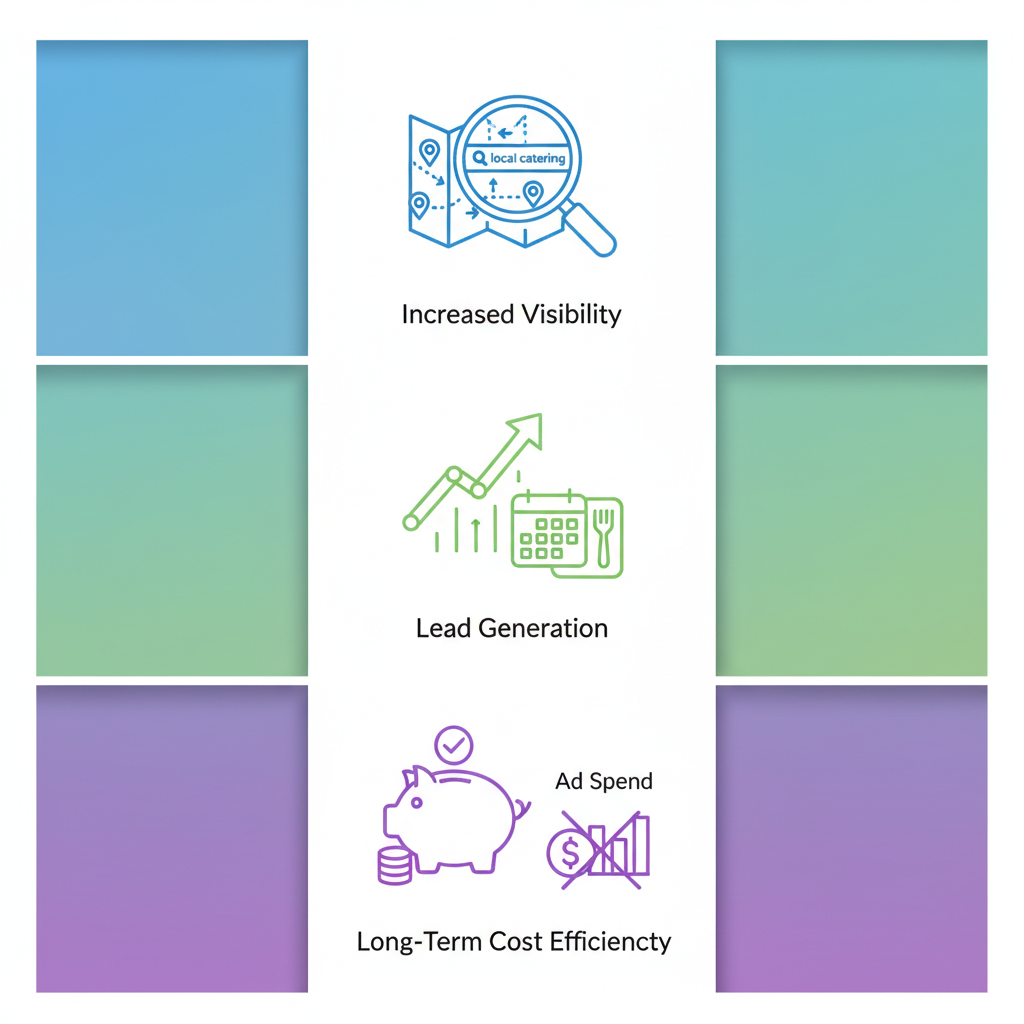
Key benefits of SEO implementation in catering business
Building on this foundation, the real value emerges in converting that traffic into action, as explored next.
Lead Generation and Booking Growth
Once visibility is secured, SEO funnels organic searches into consistent leads, especially for high-value segments like corporate catering. Optimized content around event planning and menu offerings converts browsers into bookers by addressing specific needs, such as customized packages for conferences or galas. This direct path boosts ROI, with many caterers reporting streamlined inquiry processes.
- Targeted traffic: Queries for corporate events yield qualified prospects, increasing booking rates by up to 40%.
- Conversion optimization: Well-structured pages guide users to contact forms, turning visits into scheduled tastings.
- Scalable results: seo for caterers integrates with existing funnels for seamless growth.
A case in point: One mid-sized firm saw a 50%+ rise in inquiries after six months of focused efforts, primarily from B2B searches. SEO advantages for event providers shine here, offering organic growth for catering firms without aggressive outreach. This approach not only fills calendars but also enhances client relationships through reliable, search-driven connections.
Long-Term Cost Efficiency
Beyond immediate gains, SEO provides sustained benefits that outpace traditional paid ads, with results compounding over time. Initial investments in audits and content yield ongoing traffic, reducing dependency on fluctuating ad budgets. For caterers, this means predictable lead flow, especially as algorithms favor consistent performers.
Market projections for 2025 highlight how organic strategies deliver 3-5x returns compared to PPC, with timelines showing noticeable lifts in 3 months and full momentum by 12. Key advantage: Enduring value. Unlike ads that stop when funding ends, SEO builds equity, such as backlinks from event directories that amplify reach for years.
Consider a wedding caterer who shifted to SEO: After the first quarter, inquiries stabilized at 20% above baseline, scaling to corporate catering without added costs. This efficiency addresses feast-or-famine cycles, ensuring steady bookings. By quantifying short-term tweaks and long-term positioning, caterers can envision a resilient operation, ready to capitalize on evolving search trends.
How Catering SEO Drives Leads and Bookings
Catering SEO transforms online visibility into a steady stream of qualified leads and bookings by optimizing your website to attract event planners searching for reliable options. This process starts with identifying high-intent keywords and builds through targeted content and local signals, ultimately funneling visitors toward inquiries. By implementing these strategies, caterers can answer common questions like how to find dependable catering services near me for events or what makes corporate catering effective, guiding potential clients from awareness to action.
The four core steps–keyword targeting, content creation, local optimization, and measurement–create a cohesive system that boosts organic traffic and conversion rates. Consider a caterer focusing on weddings; after optimization, their site ranks higher for relevant searches, drawing in planners ready to book.
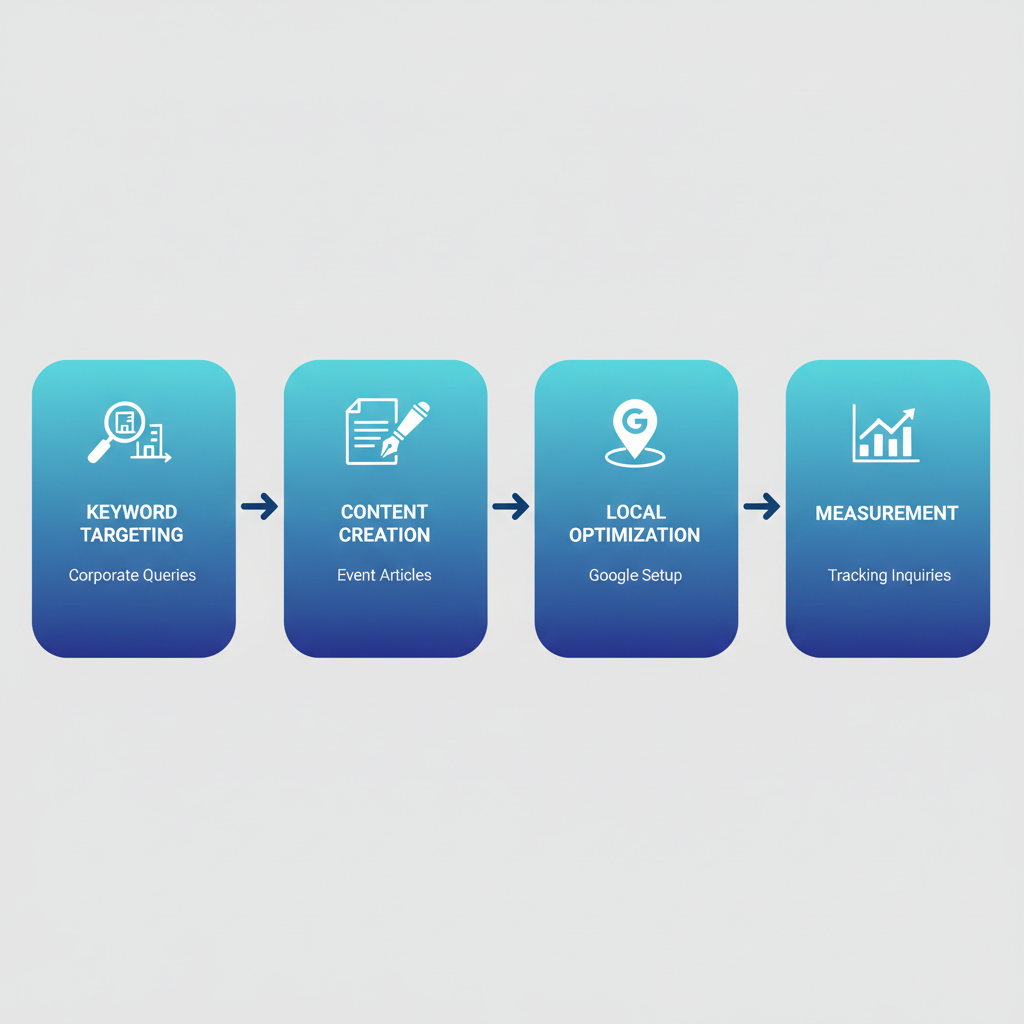
Four-step Catering SEO process driving leads and bookings
Keyword Targeting for Event Searches
Effective keyword targeting forms the foundation of Catering SEO by aligning your site with what event planners type into search engines. Begin by researching terms that reflect user intent, such as those related to specific occasions or business needs. Tools help uncover search volume and competition, ensuring you focus on phrases with high potential for driving traffic from decision-makers.
For instance, prioritize terms like corporate catering, which often indicate businesses planning lunches or conferences. A caterer targeting this might select variations like “corporate event catering packages” to capture broader queries. This approach not only attracts qualified visitors but also positions your business as an expert in professional settings.
- Use Google Keyword Planner to input seed terms and review suggestions.
- Analyze monthly searches and competition levels.
- Integrate top keywords into page titles and meta descriptions.
Tip: Aim for a mix of short-tail and long-tail keywords to balance reach and specificity, avoiding overly broad terms that dilute focus.
Content and Local Optimization Tactics
Content creation and local optimization work together to engage searchers and convert them into leads, especially for queries seeking catering services near me for local events. Develop blog posts or guides centered on event types, such as wedding menus or gala setups, to demonstrate expertise and encourage shares. Pair this with local SEO elements like consistent business listings across directories to enhance visibility in geographic searches.
An example involves writing a post on “Planning Corporate Catering for Team-Building Events,” incorporating tips on dietary accommodations. This content can rank for related searches while seo services for catering help refine on-page elements. Additionally, secure reviews from satisfied clients to build trust signals that influence rankings.
- Claim and optimize your Google My Business profile with photos and hours.
- Build citations on sites like Yelp and local chambers.
- Pursue partnerships for backlinks, which can increase domain authority by 20 percent according to industry insights.
Tip: Always prioritize mobile-friendly designs; ignoring this common error can tank rankings since most planners search on phones.
Measuring Impact on Inquiries
Tracking the impact of lead-driving search tactics for caterers ensures you refine efforts for better booking optimization online. Integrate analytics to monitor how SEO drives traffic through the funnel, from initial visits to form submissions. This data reveals which keywords or pages generate the most inquiries, allowing adjustments for sustained growth.
For a corporate catering firm, metrics might show a 30 percent uptick in inquiries after optimizing for event-specific content. Use these insights to attribute bookings to organic sources, celebrating wins like increased conversions from local searches.
- Set up Google Analytics goals for inquiry forms and track conversions.
- Monitor rankings with tools like SEMrush for keyword performance.
- Review funnel drop-offs to identify optimization opportunities.
Tip: Regularly audit for seasonal trends in event searches to allocate resources effectively and avoid stagnant results.
Best Practices for Optimizing Your Catering Website
Optimizing a catering website goes beyond basic setup, focusing on technical refinements and strategic content to boost visibility for high-value queries like corporate events and local bookings. By implementing these best practices, caterers can enhance user experience, improve search rankings, and drive more inquiries. This section outlines key areas to refine your site for long-term success in a competitive market.
Mobile-Friendly Design and Speed
In the realm of Catering SEO, mobile-friendly design stands as a cornerstone, especially since 60% of searches occur on mobile devices according to industry insights. Event planners scouting for catering services near me often browse on phones while on the go, making responsive layouts essential. A site that adapts seamlessly to various screen sizes ensures quick navigation to menus, galleries, and contact forms, reducing bounce rates and signaling quality to search engines.
To implement, start with free tools like Google’s PageSpeed Insights to audit loading times. Compress images, enable browser caching, and minify CSS files for speeds under three seconds. Bold tip: Prioritize AMP for menu pages to serve lightning-fast versions on mobile.
Common pitfalls include ignoring touch-friendly buttons or overloading with heavy plugins, which can lead to slow performance and frustrated users. Avoid over-optimization by testing changes incrementally to prevent layout breaks.
Creating Compelling Event Content
Engaging content differentiates your site, particularly for corporate catering where decision-makers seek reliable, professional options. Highlight seasonal menus through blogs on office luncheons or wedding packages, using galleries to showcase plated meals and event setups. Testimonials from past clients build trust, answering queries like how to choose a corporate catering company by demonstrating proven results.
Develop a content calendar aligned with events like holidays or conferences. Incorporate schema markup for recipes and events to enable rich snippets in search results, increasing click-through rates. Integrate this with email nurturing by gating premium guides behind sign-ups to capture leads.
Steer clear of generic stock photos or thin descriptions, which dilute authority. Overstuffing keywords risks penalties, so focus on natural storytelling that resonates with wedding and corporate audiences.
Ongoing Monitoring and Adjustments
Advanced SEO techniques for caterers require regular vigilance to maintain edge over competitors. Conduct monthly audits using tools like Google Analytics to track traffic from catering services near me searches and conversion rates. Analyze competitors via SEMrush for gaps in website enhancement for bookings, such as unoptimized forms or missing voice search readiness.
Steps include A/B testing headlines and calls-to-action, monitoring core web vitals, and managing reviews on Google My Business for local trust signals. Prepare for voice search by optimizing for conversational queries like best corporate catering for office events.
Pitfalls to avoid: Neglecting algorithm updates can drop rankings, and skipping data privacy compliance erodes user confidence. Use checklists for audits: 1. Review bounce rates; 2. Update meta tags; 3. Check schema validity. This proactive approach ensures sustained growth without over-optimization risks, tying into broader lead generation strategies like catering company seo.
Elevate Your Catering Business with SEO
In this guide, we’ve explored how Catering SEO serves as a powerful tool to enhance online visibility for your catering business. From optimizing local searches to crafting content that attracts event planners, these strategies address core concerns like timelines, costs, and implementation. Key takeaways include expecting results in 3-6 months with consistent effort, enjoying cost-effective growth compared to traditional advertising, and recognizing the limitations of DIY approaches versus the precision of expert guidance.
Reflecting on our discussion:
- SEO timelines typically yield noticeable improvements within 3-6 months, building sustainable traffic over time.
- Costs remain accessible, often starting at a few hundred dollars monthly for professional services, far outweighing paid ads’ short-term expenses.
- DIY efforts can handle basics like Google My Business setup, but experts excel in technical audits and funnel integration for higher inquiry conversions.
As you consider next steps, audit your current SEO to identify gaps, beginning with local optimization to capture searches for catering services near me. Integrating these with lead strategies for events ensures a steady stream of bookings for corporate catering and weddings alike. Looking ahead, SEO will dominate 2025 catering marketing, as industry trends confirm.
For SEO success for catering pros, explore done-for-you solutions like the catering growth engine, where case studies show clients achieving 184% inquiry increases and rapid lead generation. Take action today to transform your business and secure measurable outcomes.