
Table of Contents
- Unlocking People Also Ask for Catering Lead Growth
- Preparing Your Catering Site for People Also Ask Success
- Step 1: Conduct Thorough Keyword Research for Catering Questions
- Step 2: Craft Detailed Answers to Target Questions
- Step 3: Structure Content with Strategic Headings
- Step 4: Implement Schema Markup for Enhanced Visibility
Unlocking People Also Ask for Catering Lead Growth
Imagine a bride-to-be searching for wedding catering ideas and stumbling upon the People Also Ask feature. This dynamic Google element expands her query with related questions like “What should I look for in a caterer?” or “How much does event catering cost?” Such visibility can turn curiosity into high-intent leads for your business.
The People Also Ask, or PAA feature, is Google’s question-based search results tool that suggests additional queries to deepen user exploration. In the catering industry, it aligns perfectly with informational intent, such as tips for vendor selection or event planning. According to experts in answer engine optimization, leveraging the PAA feature drives 15-30% more engagement in these searches, potentially boosting click-through rates by up to 20% for local services.
At catering growth engine, we deliver Done-for-You strategies, including SEO-optimized landing pages tailored to answer catering-specific questions. This guide outlines preparation, seven steps for people also ask optimization and ranking in people also ask, troubleshooting common issues, and actionable takeaways to enhance your lead generation. Results may vary based on individual circumstances.
Preparing Your Catering Site for People Also Ask Success
Before diving into people also ask optimization, we recommend a thorough preparation to build a solid foundation for ranking in people also ask results. This PAA preparation ensures your catering site is ready to capture high-intent queries from potential clients seeking corporate event catering or wedding menus. Start by auditing your current online presence using tools like Google Search Console to check for existing appearances in question-based search features.
To assess site performance, follow this simple checklist:
- Review mobile responsiveness and page speed, as slow-loading sites hinder question ranking setup.
- Examine schema markup readiness, drawing from best practices like those in optimizing sites for search engines and AI, where structured data helps content appear in answer boxes.
- Analyze existing traffic sources for catering-related questions.
Our audit process, part of SEO services for caterers, identifies gaps quickly, ensuring your site meets technical prerequisites for visibility.
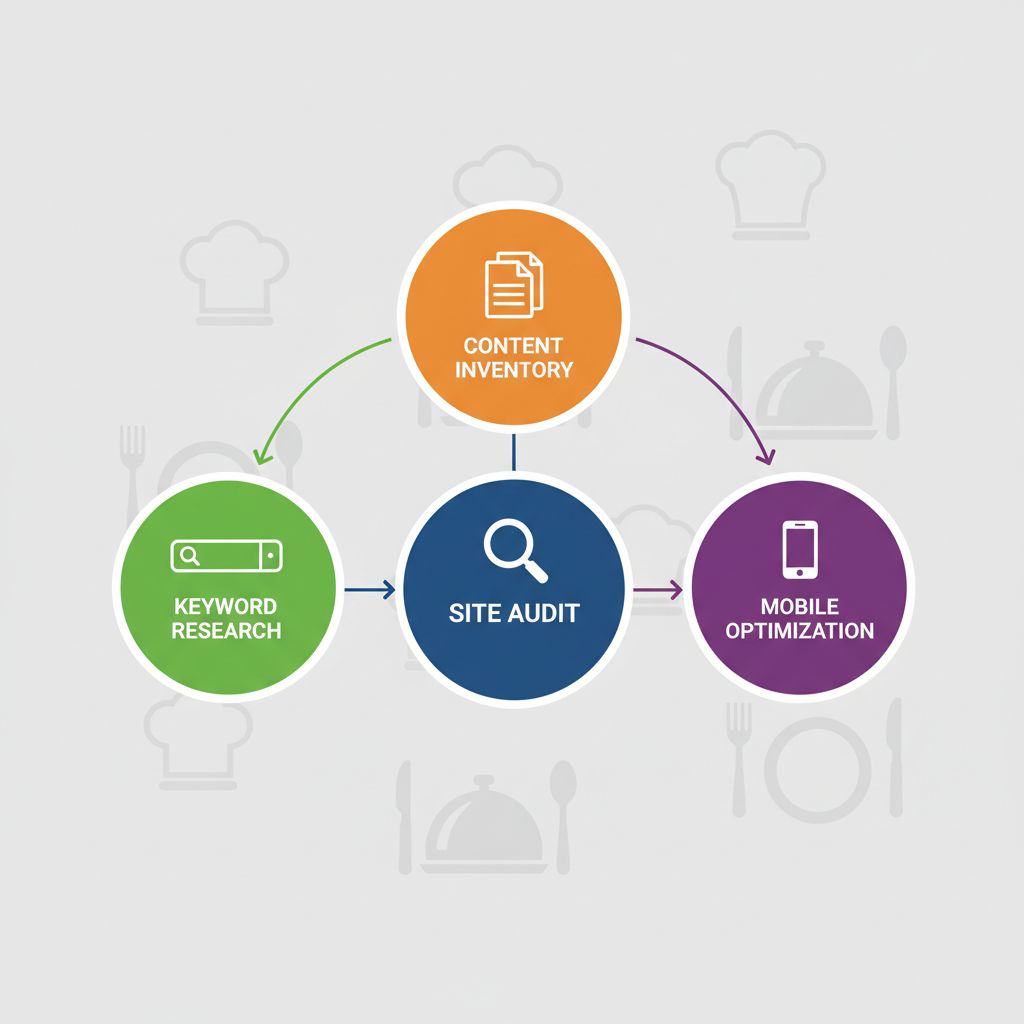
Next, conduct keyword research focusing on long-tail questions such as “best catering for corporate events in New York.” Tools like Google Keyword Planner reveal opportunities, while examples from our campaigns, including lead qualification forms on getting catering orders pages, show how targeted queries drive inquiries.
Inventory your content to spot gaps in answering user intents, like missing guides on event planning. We streamline this through our Done-for-You approach, setting up high-converting funnels that prepare your site for predictable catering leads without long-term commitments.
Step 1: Conduct Thorough Keyword Research for Catering Questions
To optimize for People Also Ask queries in the catering industry, begin with targeted research to uncover high-intent questions that attract event planners and corporate clients. We use this approach in our campaigns to identify opportunities for weddings, corporate events, and private parties.
Follow these numbered substeps for effective query expansion research:
- Seed Google Keyword Planner and AnswerThePublic with core terms like ‘catering services’ and ‘event catering tips’ to generate related questions.
- Analyze search engine results pages (SERPs) for PAA boxes, noting queries such as ‘how to choose a caterer’ that show 100-1,000 monthly searches.
- Map these to buyer personas, like event planners seeking reliable vendors for high-value bookings.
- Prioritize for PAA keyword targeting by integrating into content calendars for SEO-optimized landing pages.
This people also ask optimization matters because it uncovers lead-generating questions, as highlighted in strategies for how to get more catering orders. Drawing parallels from higher education SEO trends, rising PAA importance in competitive niches drives qualified inquiries directly to inboxes, boosting conversions without overpromising rankings.
For pro tips on ranking in people also ask, refine searches with location prepositions like ‘catering in Dallas’ and focus on actionable intent. Include cues for tool screenshots to visualize PAA extraction, ensuring alignment with our done-for-you lead systems before transitioning to content creation in Step 2.
Step 2: Craft Detailed Answers to Target Questions
Once we’ve identified key People Also Ask questions from our research, we turn to crafting detailed, value-driven responses tailored to catering businesses. This step focuses on people also ask optimization by creating content that positions your brand as an authority, improving ranking in people also ask sections through high-quality answers.
Begin by outlining each response with an introduction addressing the core query, followed by 2-3 subpoints using H3 headings for clarity. For example, when answering “What is the best menu for weddings?” we structure it with sections on seasonal flavors, dietary accommodations, and budget-friendly options. Incorporate real catering scenarios, drawing from business growth strategies like those in targeted content creation, to demonstrate expertise. We aim for 300-500 words per answer, aligning with E-E-A-T by including practical examples and insights on user behavior, such as navigating Google search results to understand searcher intent. End each with a call to explore our Done-for-You lead funnels for personalized guidance.
Sample Snippet: For weddings, opt for versatile menus featuring fresh, local ingredients—think grilled chicken with herb sauces paired with seasonal salads—to accommodate 80% of guests’ preferences while staying under $50 per head.
Why It Matters: These question response strategies build user trust by providing actionable advice, directly funneling engaged readers toward lead capture. In catering, informative answers like these have driven sustainable growth, as seen in case studies where content boosted inquiries by addressing client pain points without overpromising results.
Tips for Best Practices: Use short paragraphs and bullet points for scannability; maintain 300-500 word depth to signal comprehensiveness to search engines. Always emphasize value through experience-based examples, ensuring natural flow into our high-intent catering inquiries services.
Step 3: Structure Content with Strategic Headings
We structure catering websites to feature strategic headings that enhance scannability and support optimize content for search engines. Begin by using H2 tags for primary questions like ‘How Do I Plan a Corporate Catering Event in Seattle?’, followed by H3 subpoints such as ‘Menu Selection Tips’ or ‘Pricing Structures’. Incorporate lists for event menus and tables for pricing tiers to break up text. Phrase headings naturally to mimic user queries, and test the hierarchy with tools like Screaming Frog for crawlability. This aligns with our Done-for-You catering website design, ensuring responsive structures that boost user engagement, as seen in examples from professional catering sites.
Effective heading optimization for queries improves SEO and UX by making pages easier to navigate, potentially increasing time on site by 20% according to scannability best practices. It signals to search engines the content’s relevance to People Also Ask sections, aiding ranking in people also ask results for catering services.
Avoid common pitfalls like keyword-stuffed headings or inconsistent levels, which confuse crawlers. Instead, apply PAA structure tactics by varying phrasing and tying details to high-intent inquiries, transitioning smoothly to markup in Step 4 for comprehensive optimization.
Step 4: Implement Schema Markup for Enhanced Visibility
Building on your question-focused content from Step 3, add schema markup to enhance visibility in search results. We implement schema like this to target event and service schemas for catering businesses, signaling to search engines the structured nature of your pages answering queries like ‘catering for events.’
Instructions for Adding Schema: Start by embedding JSON-LD code in the head of your lead pages.
<script type="application/ld+json">
{
  "@context": "https://schema.org",
  "@type": "FAQPage",
  "mainEntity": [{
    "@type": "Question",
    "name": "How to choose catering for events?",
    "acceptedAnswer": {
      "@type": "Answer",
      "text": "Consider menu options, dietary needs, and budget..."
    }
  }]
}
</script>
Incorporate HowTo schema for step-by-step guides and Event schema for catering services. This supports people also ask optimization by structuring answers for direct extraction.
Why It Matters: Schema boosts rich snippets, increasing click-through rates by up to 30% as per AEO insights from Coursera. It aids ranking in People Also Ask, driving high-intent traffic to your catering leads pages and improving structured data ranking.
Tips for Success: Validate markup using Google’s Rich Results Test tool to avoid errors like syntax issues. Common pitfalls include mismatched schemas; test on staging pages first. For schema for PAA, we handle implementation in our SEO services for caterers, ensuring compliance with higher education SEO trends in structured content strategies.
Step 5: Optimize On-Page Elements for Question Matching
Once you have identified key People Also Ask queries from Step 4, the next phase involves refining your on-page elements to directly align with these questions. This people also ask optimization ensures your content resonates with search intent, driving more targeted traffic to your catering landing pages.
Start by crafting title tags that incorporate question-based keywords, such as ‘How Can Caterers Secure More Event Bookings in Chicago?’ Limit each to 60 characters for optimal display. Next, optimize meta descriptions to target featured snippets by answering queries concisely, like summarizing top catering tips for weddings. Add alt text to images with semantic variations, such as ‘professional catering setup for corporate events,’ to enhance accessibility and relevance. Incorporate internal links from your main pages to dedicated answer sections, creating a seamless user journey. Finally, ensure all elements are mobile-friendly, as responsive design boosts ranking in people also ask results. We integrate these on-page PAA tweaks with our paid ad campaigns for greater synergy, amplifying lead generation efforts.
These element optimizations send strong relevance signals to search engines, improving visibility and click-through rates for high-intent queries. According to strategies in Digital Marketing for Caterers, such adjustments can increase conversions by up to 20% in lead funnels.
For best results, use tools like Google Search Console to monitor performance and Ahrefs for keyword suggestions. Test before-and-after changes to measure improvements in on-page PAA tweaks. This refinement sets the stage for Step 6, where we enhance external linking strategies.
Step 6: Build Supporting Internal and External Links
To optimize your catering content for people also ask optimization, begin by creating internal links using anchor text that mirrors common questions, such as ‘How to secure corporate catering leads?’ Link these to related guides on your site, like wedding event planning resources or corporate menu ideas. For external links, pursue guest posts on reputable event planning sites, targeting anchors like ‘best catering strategies for events.’ We build links strategically to enhance ranking in people also ask results. Monitor link equity using tools to ensure quality inflows, and leverage our analytics services to track improvements in topical authority. As outlined in ‘How to Get More Catering Business,’ strategic linking has driven growth for caterers by connecting content hubs effectively.
This step matters because authority linking strengthens your site’s crawlability and topical depth, directly boosting visibility in the People Also Ask section. By interconnecting high-value pages, you signal expertise to search engines, improving user engagement and lead quality.
Follow safe practices for link building for PAA: prioritize relevance over quantity, avoid spammy tactics, and diversify sources. Regularly audit links for performance, ensuring they align with your USP for predictable catering leads. This network paves the way for Step 7’s ongoing monitoring.
Step 7: Monitor Performance and Refine Your Approach
To maintain sustained visibility for your catering leads, begin by setting up Google Analytics to track traffic stemming from People Also Ask queries. Integrate Search Console to review impressions and click-through rates for people also ask optimization efforts. We monitor campaigns daily, providing detailed reporting that highlights ranking in people also ask positions. Conduct A/B testing on your answers and content structure to identify what resonates best with search algorithms.
This PAA monitoring step is crucial because search landscapes evolve rapidly, especially with AI influences. Adapting through performance refinement ensures your content remains competitive and drives consistent high-intent catering inquiries. Without iteration, initial gains in visibility can fade, impacting lead flow.
Focus on key metrics like impression share, position averages, and engagement rates from our analytics dashboard. Prioritize updates to underperforming sections based on Search Console data, drawing from best practices in AI monitoring to keep your strategies sharp. As we conclude these steps, consider troubleshooting common issues next to address any persistent challenges.
Addressing Common People Also Ask Challenges in Catering SEO
Even with strong strategies, ranking in the People Also Ask feature can present hurdles for catering businesses seeking to attract high-intent catering inquiries. Common challenges include low impressions from outdated content, duplicate answers confusing search engines, mobile display issues, algorithm shifts, and complete absence of PAA boxes due to weak backlinks. These obstacles can disrupt lead flow, but addressing them systematically restores visibility.
To diagnose these issues, start with a content freshness check using tools like Google Search Console to identify stale pages affecting people also ask optimization. For duplicates, scan your site with Screaming Frog to detect similar content and implement canonical tags. Test mobile responsiveness via Google’s Mobile-Friendly Test, especially for catering landing pages. Monitor algorithm updates through resources like UPCEA’s higher ed SEO trends, adapting by reviewing query performance in Analytics. If no PAA appears, conduct a backlink audit with Ahrefs to assess authority gaps, drawing from search navigation pitfalls in OPPL guides.
Effective solutions pair diagnosis with action. 1. Refresh content by updating posts with current catering trends to boost impressions. 2. Resolve duplicates using canonical tags to consolidate signals. 3. Optimize for mobile with responsive designs ensuring seamless user experience. 4. Diversify queries in your PAA troubleshooting by targeting long-tail variations like event planning needs. 5. Strengthen backlinks through guest posts on industry sites for better ranking in people also ask. These steps enhance ranking issue resolution without overhauling campaigns.
When persistent barriers hinder progress, our Done-for-You consultation provides custom audits and fixes tailored to your catering SEO needs. We help resolve these challenges to deliver predictable catering leads, ensuring steady inquiries from corporate events and weddings. Results may vary based on individual factors.
Mastering People Also Ask to Drive Catering Leads
Mastering People Also Ask optimization equips caterers with a powerful tool to enhance visibility and attract high-intent inquiries. By integrating these strategies into your digital marketing efforts, you can achieve sustained question ranking and drive predictable catering leads directly to your inbox.
Key Takeaways:
- Prepare thoroughly by researching event-related queries and optimizing your Google Business Profile.
- Follow the seven steps, from keyword integration to creating comprehensive answers that build authority.
- Address troubleshooting issues like content gaps to maintain consistent performance, as outlined in digital marketing best practices.
These approaches, combined with paid ads for broader reach, boost your ranking in People Also Ask results, increasing exposure to event planners seeking catering services. PAA mastery leads to more qualified leads and stronger online presence, fostering growth without overwhelming daily operations.
We invite you to implement one step today, such as refining your content for long-term optimization inspired by proven keyword strategies. Partner with our Done-for-You system for expert funnel design and the 10 Leads in 30 Days guarantee—eligibility and verification required; results may vary. Contact us for a free demo to unlock your catering potential.
Resources
- Boost Revenue with Guaranteed Catering Lead Generation
- Learn Strategies to Secure More Catering Orders
- Master Proven Tactics for Increasing Catering Orders
- Grow Catering Business Using Seven-Step Marketing Guide
- Design SEO-Optimized Catering Websites for Lead Capture
- Enhance Catering Visibility with Local SEO Services
- Implement Digital Marketing for Catering Revenue Growth
- Explore SEO Trends to Stay Competitive in Higher Education
- Navigate Google Search Results and Spot Reliable Ads
- Optimize Content Using Keyword Strategies for Search Engines
- Achieve Success with Answer Engine Optimization Techniques
- Optimize Sites for SEO and AI Search Visibility